

In a Netherlands authorities TV campaign titled "Flip the Switch" an actress warns audience members about their electricity usage.
"When we everyone consume electricity at the identical moment, our electricity network gets overburdened," she says. "This can lead to failures. So, employ as little electricity as feasible between 4 and 9 PM."
This represents a sign that, in among the most-advanced economic systems in the world, something has developed problems with the country's power supply.
Electric Vehicle Adoption and Green Power Growth
The Netherlands has been an enthusiastic user of EVs. It boasts the greatest number of EV stations per person in Europe.
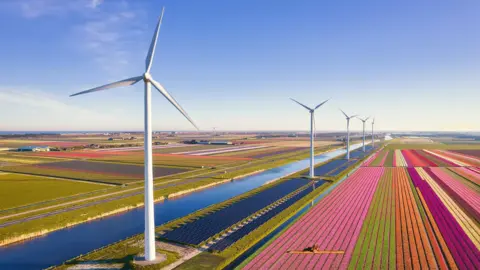
As for electricity production, this nation has substituted natural gas from its large North Sea resources with wind and solar.
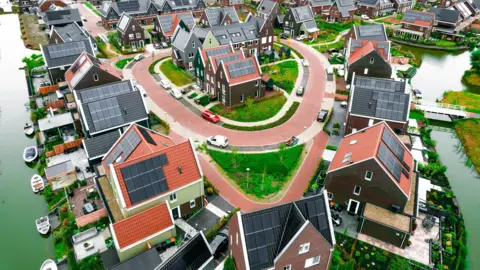
To such an extent that it pioneers the way in Europe for the number of solar panels per person. In fact, more than one third of Netherlands homes have PV installations fitted.
This nation is also targeting offshore wind farms to be its largest provider of power by the year 2030.
Network Congestion Issues
While this is all positive in ecological aspects, it's placing the Netherlands' electricity grid under significant pressure, and in recent years there have been a number of outages.
The problem is "network overload", says Kees-Jan Rameau, CEO of a Dutch energy producer and supplier.
"Network overload is similar to a bottleneck on the electricity network. It's caused by either excessive energy consumption in a certain area, or excessive power supply fed into the grid, beyond what the grid can manage."
He explains that the challenge is that the grid "was created in the era when we had just a handful of very large, mainly gas-fired power plants".
"Therefore we constructed a grid with very big power lines close to those generation sites, and progressively thinner power lines as you got closer to the residences.
"Nowadays we're switching to renewables, and that implies there's a lot of power being fed into the network in the outskirts of the network where there are only comparatively small cables."
And these small power lines are struggling to deal with all the power coming in from wind generators and PV systems distributed around the nation.
Specialist Analysis and EU-wide Context
An electrical engineering professor, academic of electrical engineering at a European university, is among the continent's leading experts on electricity grids. He states it is an expensive problem for the Netherlands to resolve.
"They have a grid crisis because they didn't put money sufficiently in their local grids, in their transmission networks, so they are facing constraints throughout, and it will take a long time and many billions of dollars to address this."
The expert adds that it is a Europe-wide issue. "We have an vast quantity of PV systems being installed, and they are installed at a pace that is much, much too high for the grid to be able to handle."
Control Solutions and Consumer Effects
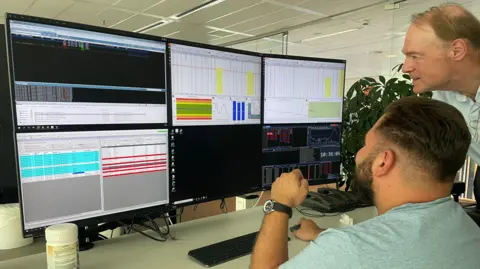
Within a major energy company's main office in Rotterdam, executives highlight a substantial control panel that the organization calls its "virtual power plant" and "the control center of our operations". It is used to assist in balance the grid, preventing power failures.
During periods power production is excessive throughout the country, it enables operators to turn wind turbines away from the wind and deactivate PV systems.
Regarding when consumption for power is peak, it lowers the power to customers who have accepted to allow providers to interrupt or limit their power delivery when the network is under strain in return for lower rates.
But for homes and companies who wish to expand their consumption of energy with a additional or larger grid connection, that, more and more, is just not possible.
"Frequently consumers want to set up a heat pump, or power up their EV at their residence, but that requires a significantly larger power connection, and progressively they just cannot get it," says the energy executive.
He adds that it is worse for businesses. "Often they aim to expand their activities, and they just cannot receive additional capacity from the network managers.
Moreover it has got to the point where including new housing construction in the Netherlands is becoming increasingly difficult, because there's just no available power to connect those new neighbourhoods to the network."
Those individuals, and businesses, end up on queues for a several of years. Simultaneously there are additionally backlogs for those who wish to feed the grid with power, such as a recently built house fitted with solar panels on its top.
Economic Consequences and Future Strategies
The government-owned agency that runs the Dutch power network says that 8,000 companies are presently in queue to be able to feed in power, while 12,000 others are waiting for permission to use more energy.
Some industries of the Netherlands economy are warning that it is hampering their expansion. "Grid congestion is putting the future of the Dutch chemical sector at jeopardy… while in other countries it will be more straightforward to put money," states the Head of a major trade organization.
So, could this situation avoidable? "Looking back I believe almost every problem is avoidable," comments the industry leader.
The official continues that following the 2015 climate accord on trying to tackle climate change, "we were heavily focussing on expanding the green energy production side. But we somewhat underestimated the impact it would have on the electricity network."
The grid operator is currently planning to invest 200 billion euros on reinforcing the grid, including laying some 100,000 kilometers of new cables between the present and 2050.
That's a massive amount of funding, but there is also a big cost to not spending it. Network overload is costing the Dutch economic system up to 35 billion euros a annually, as per a recently published analysis from a business consulting firm.
An experienced representative in charge of grid congestion explains that patience is unfortunately required. "In order to strengthen and reinforce the grid, we must increase twofold, triple, sometimes increase ten times the capacity of the current grid.
"Furthermore it's taking on average about a decade to


